-
How do dental bridges work?
They bridge the gap created by a missing tooth or teeth, to restore the appearance and function of the mouth. A dental bridge consists of two or more crowns, which are placed on the teeth adjacent to the gap, and a false tooth or teeth, suspended between the crowns. The crowns act as anchors, holding the false tooth or teeth in place. The false tooth or teeth are custom-made to match the colour and shape of the natural teeth, ensuring a seamless and natural-looking result.
-
When does a dental bridge become necessary?
A bridge is worth considering when you have one or more missing teeth and want to fill the gap with a fixed, natural-looking replacement. Beyond restoring your smile, it helps in practical ways. When a gap is left unfilled, the teeth around it can gradually drift or tilt into the space, which can affect your bite and make cleaning harder over time. A bridge keeps everything in its proper place and restores your ability to chew comfortably.
-
What are the different sorts of dental bridges?
Traditional dental bridges are the most common type and involve creating a crown for the tooth or implant on either side of the missing tooth, with an artificial tooth in between. Cantilever bridges are used when there is only one adjacent tooth to support the bridge. Implant-supported bridges are used when multiple teeth are missing. This involves placing implants to support the bridge.
-
How long do dental bridges last?
Most bridges last somewhere between five and fifteen years, and often longer with good care, though it varies by type. Traditional and cantilever bridges typically last around ten to fifteen years; resin-bonded bridges tend to be at the shorter end and can occasionally come loose and need re-bonding, while implant-supported bridges can last considerably longer.
What makes the biggest difference is how well you look after it. The bridge itself can’t decay, but the natural teeth supporting it still can, and decay creeping in around the edges is the most common reason a bridge eventually needs replacing. Cleaning well, including under the false tooth, keeping up regular check-ups, and protecting against grinding all help your bridge last as long as possible.
-
How do I look after my dental bridge?
Looking after a bridge is much like caring for your natural teeth, with one extra step: cleaning underneath the false tooth, where food and plaque can gather. A normal toothbrush and floss can’t easily reach there, so we’ll show you how to use a floss threader, special superfloss with a stiffened end, or a small interdental brush to clean under and around the bridge properly.
Brush twice a day, clean between all your teeth daily, and keep up your regular check-ups and hygiene visits so we can keep an eye on the bridge and the teeth supporting it. Since those supporting teeth are what hold everything in place, protecting them from decay and gum problems is the best way to get years of service from your bridge. We’ll give you a simple routine to follow at your fitting.
-
Is it painful having a dental bridge fitted?
No, having a bridge fitted shouldn’t be painful. Where the supporting teeth need preparing, we numb them first with local anaesthetic, so you stay comfortable throughout, and our Enjoyable Dentistry Technique™ helps keep you calm and relaxed, which matters if you tend to feel anxious.
A traditional bridge usually takes a couple of visits, with a temporary bridge in place while your permanent one is made. It’s normal for the prepared teeth to feel a little sensitive for a few days afterwards, which settles as they adjust.
-
Will I find eating difficult after having a dental bridge fitted?
After having a dental bridge fitted, it is common to experience some difficulty with eating initially. This is because the mouth needs time to adjust to the new prosthetic and the altered bite. Most patients are able to resume normal eating habits within a short period of time. It is important to start with soft foods and gradually introduce harder textures as the mouth becomes accustomed to the bridge. It may also be helpful to cut food into smaller pieces and chew on both sides of the mouth to distribute the pressure evenly.

Preserve
Dental Bridges
A bridge literally ‘bridges the gap’ from one tooth to another. It’s like a partial denture, designed to look like a real tooth and supported by the teeth on either side.
Book OnlineA solution to gaps due to tooth loss
At the Care Dental Group, we value preventive treatment by seeking to preserve the health of your teeth. However, where you would like to ‘bridge the gap’ between your teeth, our fantastic dentists are experts in finding the best and most natural option to match the rest of your teeth.
Benefits of Dental Bridges
- Effective solution for replacing missing teeth.
- Restores a patient’s smile and oral health.
- Enhances chewing ability.
- Restores smile confidence.
- Prevents jaw problems.
Our treatment process
1. Your Consultation
We’ll check your bite and alignment to ensure that a dental bridge is the appropriate solution for you before drawing up a treatment plan. We’ll also address any concerns or questions the patient may have.
2. Your Treatment
Depending on the type of bridge you’re having, our dentist may prepare adjoining teeth and then take impressions of them, so the bridge can be made. Implants may also be placed.

3. Aftercare
You’ll be advised to avoid sticky and hard foods that may damage the bridge. It’s also important to maintain good oral hygiene when the bridge is in place to maintain the health of the surrounding teeth and gums.
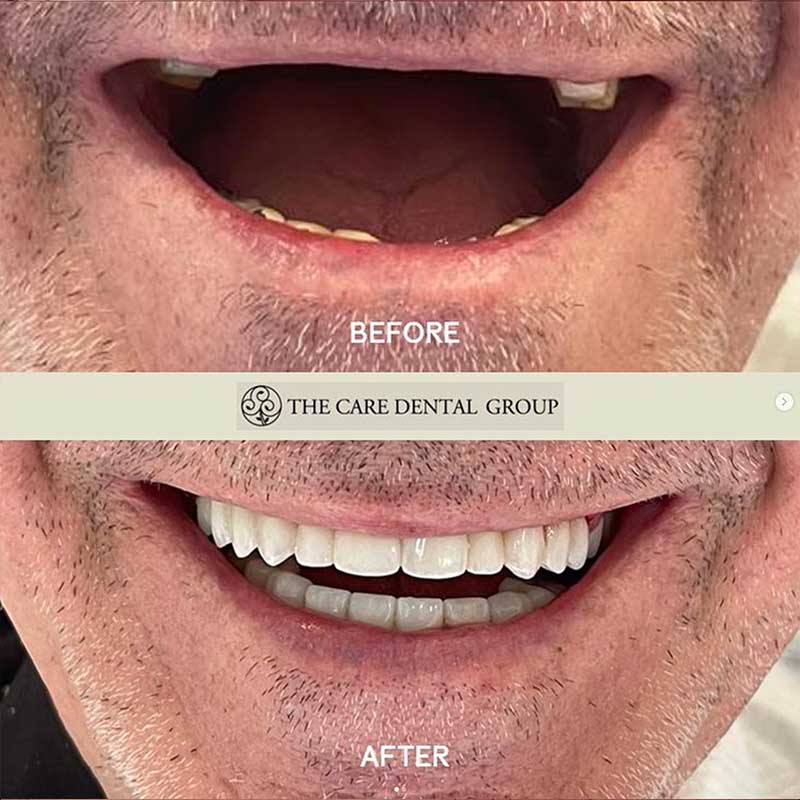
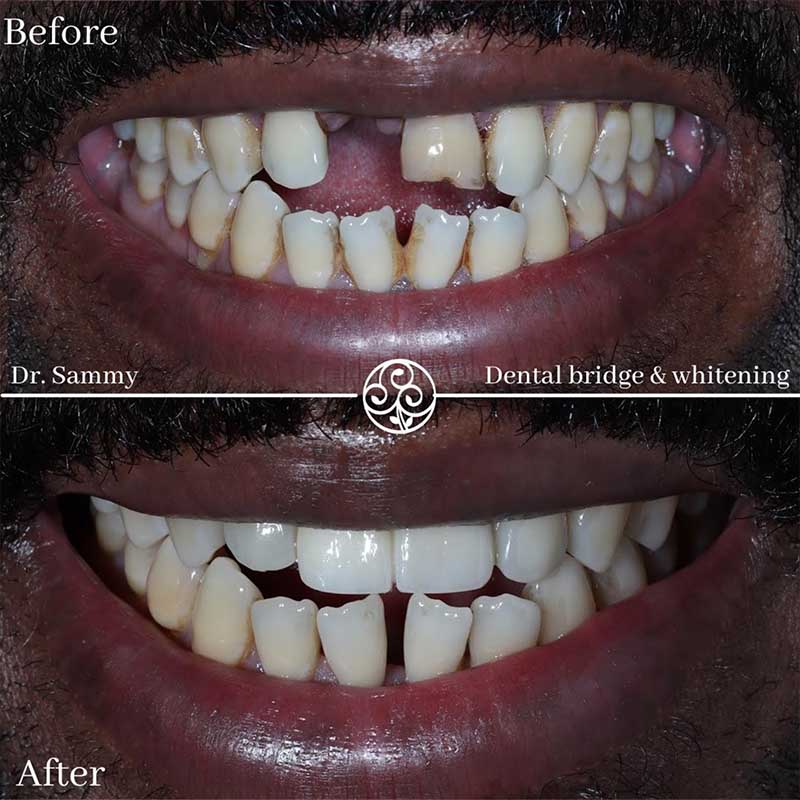
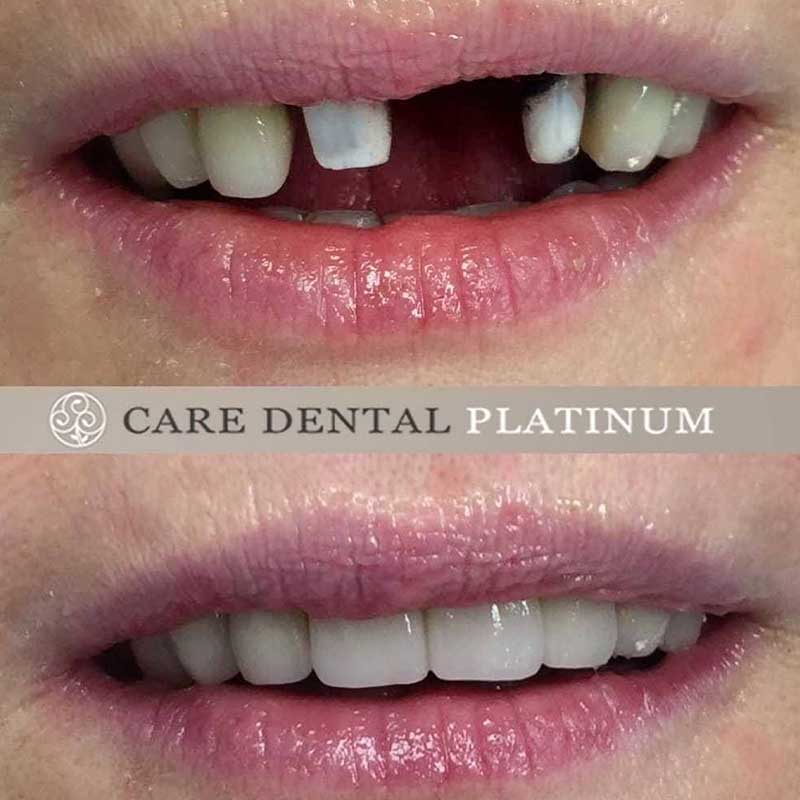
Before & After Results - Dental Bridges
FAQs
-

“I felt super anxious about getting my wisdom tooth removed but Dr. Bashar made me feel at ease. It was the most blissful wisdom tooth removal ever! Didn’t feel a thing & left elated. Thank you to the entire team for being so kind, helpful & reassuring.”
Suad Abdinasir
-
“I definitely recommend this amazing clinic! I have been a customer for almost a year now and I would never go everywhere else. Dr Rubina is excellent and understood my needs from the first appointment to the last one. She makes you feel very relaxed at all times and helps you achieve the final result requested. I definitely recommend her. The staff, in particular Ines, is really friendly and professional and I am 100% satisfied with the service provided.”
Angela Cortile
-
“Dr Rubina is just amazing!! The advice given and the care she took while performing were great! I felt safe and confident from the get go! And results are speaking for themselves. Top notch!!”
Leyla Mohamed-hamroun